
Monroe County Arrest Records and Charges
Arrest records are created on the law-enforcement or custody side. They may identify the person arrested, arresting agency, booking event, warrant or citation link, bond information, and custody status if the information is public. Monroe County research did not locate an official public online jail roster or arrest blotter, so arrest and booking questions should be routed through official sheriff, jail, court, or state custody channels rather than third-party databases.
The court charge record is different. It begins when a charge is filed with the court after an arrest, citation, complaint, information, or indictment. That court charge record is tracked in District Court or Circuit Court and later connects to hearings, pleas, dispositions, sentencing, costs, and warrants if those events occur. The full outcome belongs in the criminal case file, while custody and jail-booking detail belongs with inmate or sheriff channels.
Find Monroe County Arrest Records
There is no official Monroe County online arrest-record database or jail roster documented in the research. The practical search path is to use court records for filed charges, the sheriff or jail contact for custody and booking questions, and state systems for sentenced or statewide records. KYeCourts public records can show public case information after CAPTCHA, while KYeCourts ePay can search by case, citation, or party details when the matter is payment or citation linked.
- Start with KYeCourts public records when the goal is to find charges filed in court.
- Use ePay when a citation, case number, or exact party and birth date are available.
- Check the charge list, court division, next date, and disposition for each filed count.
- Contact the Circuit Court Clerk when the online record is missing, sealed, unclear, or needs certification.
- Contact the sheriff or custody channel for booking or jail status that is not part of the court file.
The Monroe County inmate records route is the better place to separate jail custody from court charges. A person can be arrested without a final conviction, and a person can have a court charge record without an active jail booking.
Charges Filed After an Arrest
After arrest, law enforcement may issue a citation or support a complaint, while the appropriate prosecutor decides how to proceed based on offense level and evidence. In Kentucky, county attorneys commonly handle misdemeanor and violation prosecution in District Court. Commonwealth's attorneys handle felony prosecution in Circuit Court. Monroe County research confirmed County Attorney Wes Stephens, but it did not confirm the current Commonwealth's Attorney contact, so felony prosecutor identity should be verified through the clerk or current official prosecutor sources before publication or reliance.
| Charging Document | Who Uses It | How It Fits the Court Record |
|---|---|---|
| Complaint | Law enforcement or prosecutor-supported filing | States alleged facts or offenses and can start a District Court criminal matter. |
| Information | Prosecutor | Formal prosecutor filing that may state charges when indictment is not the route used. |
| Indictment | Grand jury | Formal felony charging document that usually places the case in Circuit Court. |
Monroe County Charge Status
Charge status changes as a criminal case moves through court. A charge can be filed at arrest or citation, reviewed by a prosecutor, amended to a different offense, reduced during plea talks, dismissed by the court, or resolved by a plea or trial. Always read the status for each count, because one case can contain multiple charges with different results.
| Status | What It Means |
|---|---|
| Pending | The charge has been filed and has not reached final disposition. |
| Amended | The filed charge was changed to another charge, degree, class, or description. |
| Reduced | The charge was lowered, often during plea negotiations or prosecutor review. |
| Dismissed | The court or prosecutor ended the charge without a conviction on that count. |
| Nolle prosequi | The prosecutor declined to proceed on the charge, subject to the legal effect of the order. |
| Disposed | The charge has a final outcome, such as plea, verdict, dismissal, or other resolution. |
Charges vs Convictions
A charge is not proof of guilt. It is the allegation filed in court. A conviction is a final legal result after a guilty plea, verdict, or other finding. Monroe County arrest records and court charge records may show the early accusation, while the criminal case file later shows whether that accusation became a conviction, was dismissed, was reduced, or ended another way.
| Topic | Charge | Conviction |
|---|---|---|
| Meaning | Accusation filed after arrest, citation, complaint, information, or indictment | Final finding or plea that the offense was committed |
| Where to read | Charge list, docket events, complaint, citation, indictment | Disposition, judgment, sentence, and final order fields |
| Can change | May be amended, reduced, dropped, or dismissed | May be affected by appeal, expungement, or later order |
| Common error | Assuming every arrest led to guilt | Ignoring dismissed counts in the same case |
Charge Codes and Severity
Charge entries may identify the offense description, statute, degree, class, or severity level. Kentucky court records can include felony, misdemeanor, violation, ordinance, or traffic-criminal labels depending on the charge. Felony matters generally route to Circuit Court after the felony filing stage, while misdemeanors, violations, traffic, ordinance cases, arraignments, and preliminary felony proceedings appear in District Court.
A single arrest can produce several separate charges. Each charge should be read with its own status and outcome. For example, a case may show one dismissed count, one reduced count, and one conviction. The broader Monroe County criminal court records file is the place to read the final plea, disposition, and sentence after the charge stage.
Statewide Criminal History Lookups
Public case lookup and formal criminal-history reports are separate. KYeCourts can help locate a public court case, but the KCOJ background-check channel is the state route for criminal record reports. Kentucky Online Offender Lookup and VINELink can help with state custody or notification issues, but they are not Monroe County court charge databases.
The Monroe County Sheriff is the local law-enforcement contact for custody or warrant questions. Research lists John Lucas Geralds as sheriff in DLG data with phone 270-427-6944, while older local listings show the sheriff office at 200 N. Main St., Suite E, Tompkinsville and phone 270-487-6622. Because official sources conflict, court users should verify the current phone before relying on older listings.
Note: No official Monroe County online warrant list, jail roster, or app-only arrest lookup was located.
Sealed vs Expunged Charges
Kentucky law can limit public access to charge records after a sealing or expungement order. An expunged charge may be removed or deleted from official state-performed background checks after the court and agencies process the order. A sealed charge may still exist but be hidden from ordinary public access. Juvenile charge records are confidential under KRS 610.340 unless a specific exception applies.
| Topic | Sealed | Expunged |
|---|---|---|
| Public access | Blocked from ordinary public view | Removed or deleted from official state background checks when granted |
| Record handling | May remain available to authorized users | Agencies generally answer that no record exists, subject to statutory exceptions |
| Key Kentucky rules | Depends on court order and case type | KRS 431.073 and KRS 431.079 address major conviction and certification steps |
| Practical result | Public portal may not display the charge | Official systems may remove the charge after processing |
Restricted Monroe County Charge Records
Charge records can be withheld or redacted for several reasons. KRS 61.878 includes exemptions for privacy, law-enforcement risk, prosecutor investigation or litigation files, and records made confidential by law. Juvenile records are confidential under KRS 610.340. Mental-health details, protected addresses, full birth dates, Social Security numbers, minor names, financial accounts, victim data, and some witness information may be redacted.
Dismissed charges can still appear in a public case file unless sealed or expunged. That is why it is important to read disposition and status, not just the initial charge. A person seeking removal should review KCOJ expungement guidance and file in the court where the case was handled. In Monroe County, that normally means working through the Circuit Court Clerk at the justice center.
Monroe Arrest and Charge Sources
KYeCourts ePay supports case, citation, and party searches tied to court charges and payments.
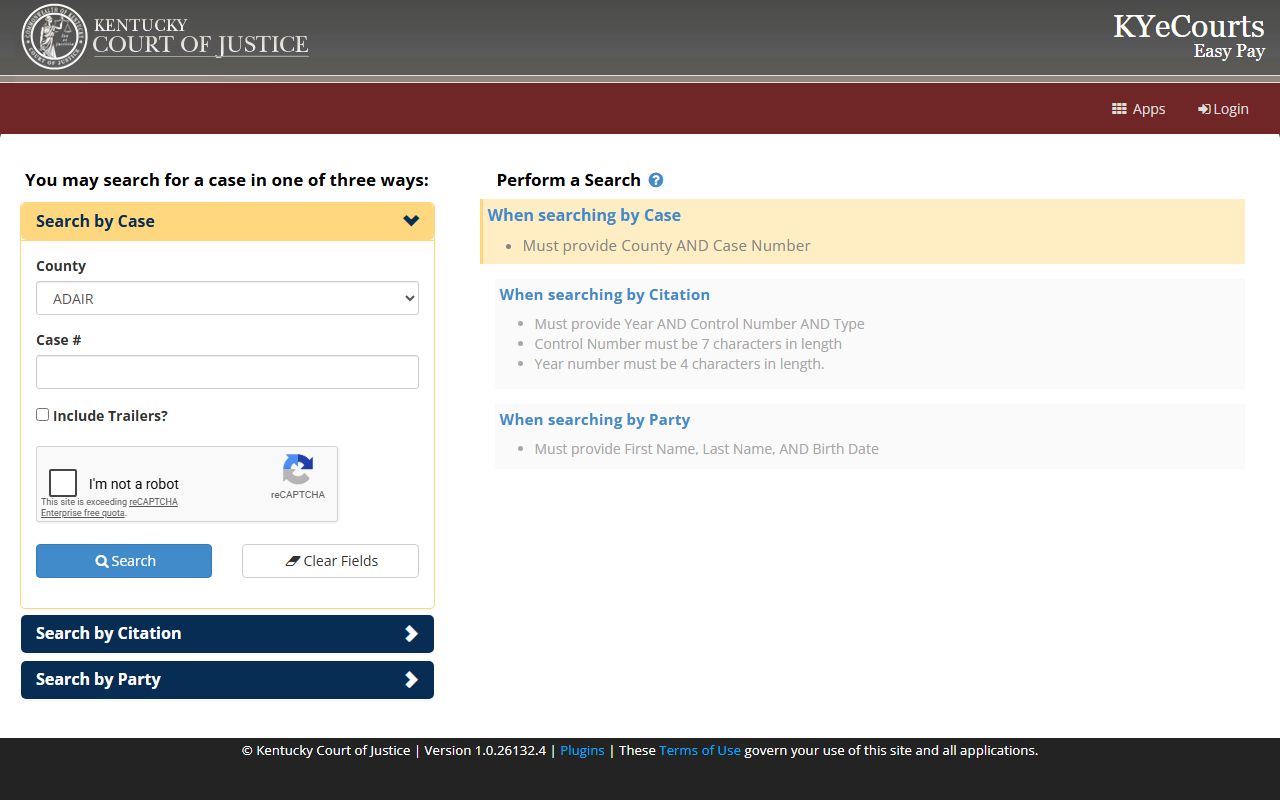
That search path is useful for filed charges, citation-linked records, and payment status, but it is not a jail booking database.
The U.S. Attorney for the Western District of Kentucky is relevant only for federal prosecutions, not ordinary Monroe County District or Circuit Court charges.
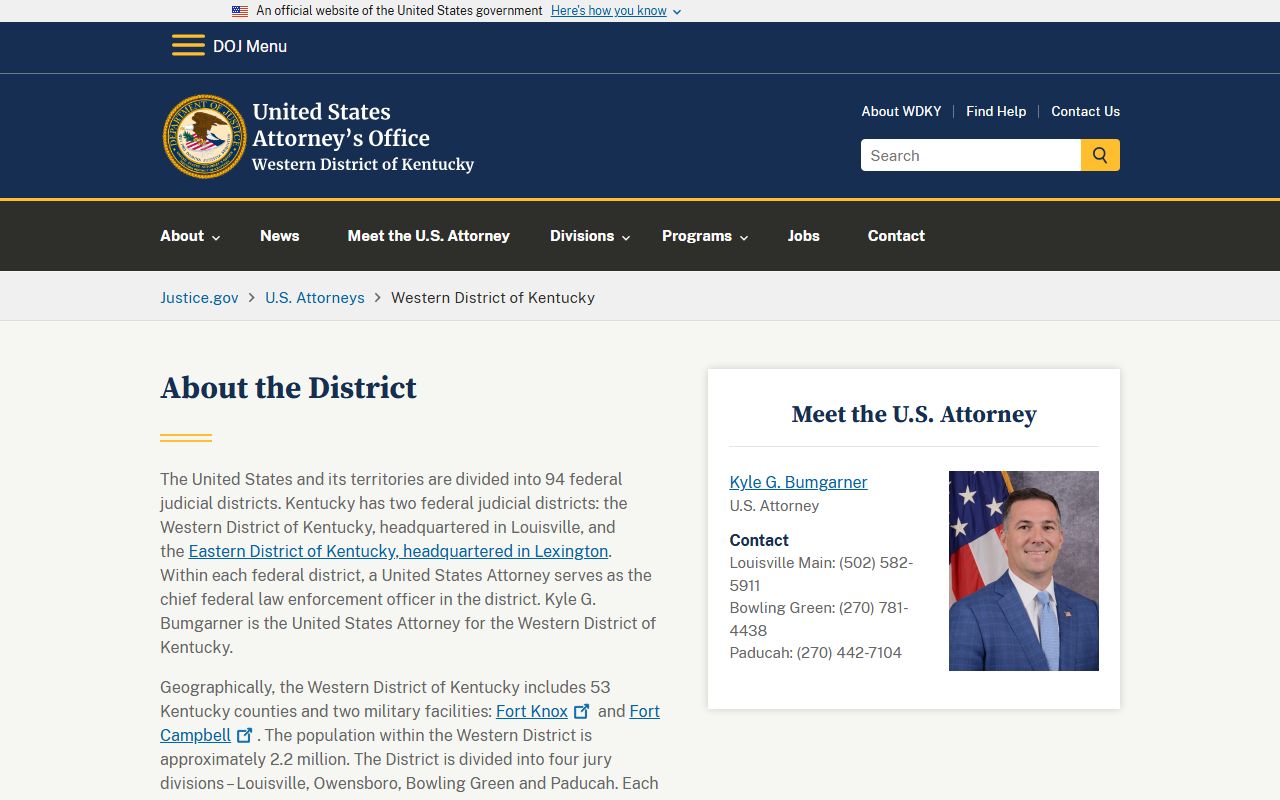
Federal charging records follow federal court channels and should not be confused with Monroe County state court charge records.
The Western District division page gives added context for federal jurisdiction in Kentucky.
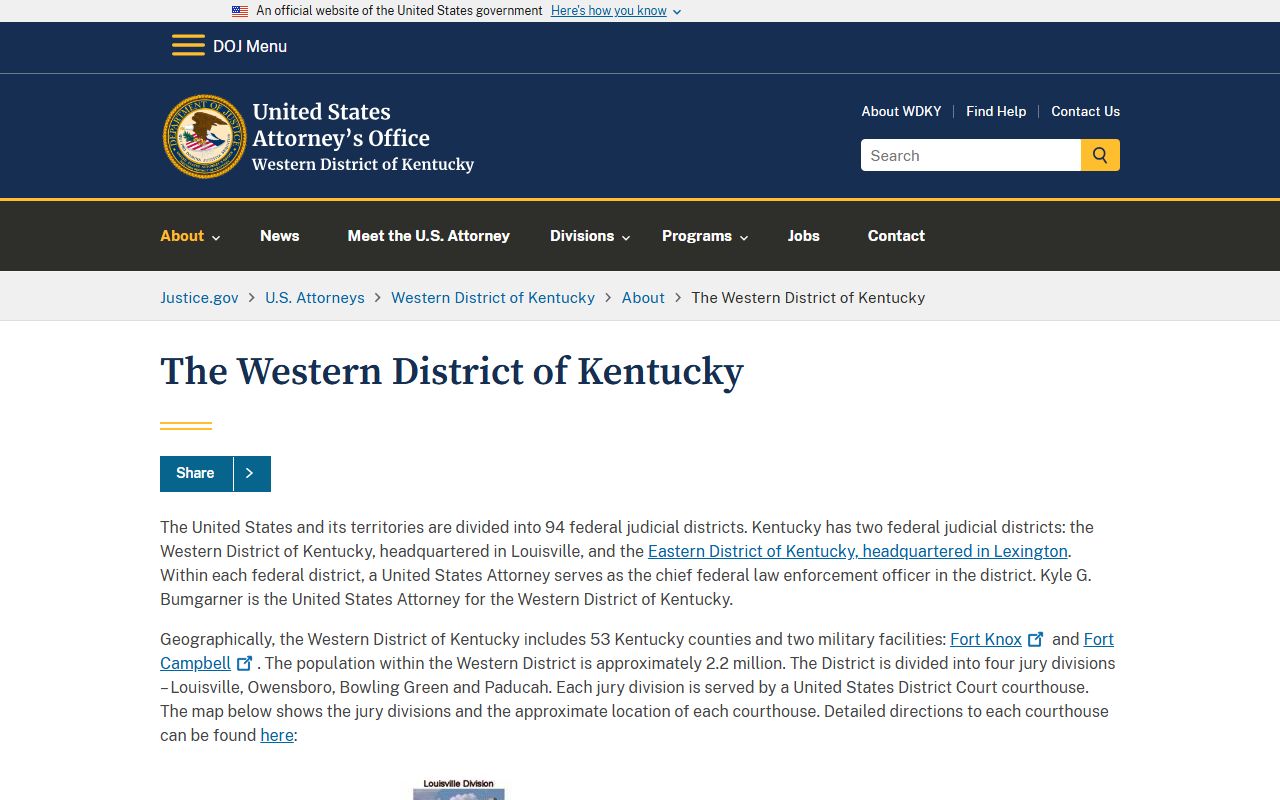
Most local arrest-to-charge questions still route through Kentucky court records, the Circuit Court Clerk, and local law-enforcement custody channels.