
Monroe County Criminal Court Records
A criminal court record is the case-level file kept after a charge becomes a court matter. In Monroe County, the Circuit Court Clerk is the local records office for both Circuit Court and District Court case files. The file may begin with a citation, complaint, arrest-warrant return, or indictment and then grow as the case moves through arraignment, motions, plea negotiation, hearings, trial, disposition, sentence, costs, restitution, probation terms, and appeal notices.
The court level depends on the offense and stage. Felony cases are Circuit Court matters after indictment or other felony filing. Misdemeanors, violations, ordinance matters, traffic-criminal matters, arraignments, and felony preliminary or probable-cause proceedings are District Court matters. A felony may appear in District Court first for arraignment or preliminary proceedings before it becomes a Circuit Court felony case.
Search Monroe County Criminal Court Records
Public criminal case information can be searched through KYeCourts Public Court Records guest access. The guest login states that public case information is free statewide after CAPTCHA. Payment-linked criminal or traffic matters may also be checked through KYeCourts ePay, which searches by case, citation, or party details. The KCOJ docket portal helps find court dates, but it is not the complete case file.
- Use guest public records for a broad criminal case lookup when the case is public.
- Use ePay if the record involves a case number, citation number, or payment status.
- Search by party only when the first name, last name, and birth date are known.
- Compare court division, case number, charges, status, and disposition before relying on a result.
- Request certified copies or official verification from the Circuit Court Clerk when a court-file copy is needed.
A criminal court record is also different from an AOC criminal record report. The KCOJ background-check page explains the separate criminal-record report process. Use that route when a formal state criminal history product is needed rather than a public case lookup.
Monroe County Criminal Case Flow
Criminal court records are easiest to read as a timeline. Each stage adds a new entry or document to the file. A single case can have several charges, and each charge can end differently. The same case may show a dismissed count, a reduced count, a guilty plea on another count, and a sentence or probation term tied only to the final conviction.
Case flow: Charges Filed › Arraignment › Pretrial / Motions › Plea or Trial › Disposition › Sentencing
| Stage | What Happens |
|---|---|
| Charges filed | A citation, complaint, information, or indictment states the offense alleged by law enforcement or the prosecutor. |
| Arraignment | The defendant appears, the charge is addressed, rights are reviewed, and plea or bond issues may be set. |
| Pretrial and motions | Parties file requests, resolve discovery issues, negotiate pleas, or prepare for trial. |
| Plea or trial | The case ends by plea, trial verdict, dismissal, amendment, reduction, or other court action. |
| Disposition and sentencing | The record states the outcome, sentence, costs, restitution, probation, jail, or other ordered terms. |
What Monroe County Criminal Records Show
The criminal case file is broader than the initial charge. It can include events from the first filing through the final order. Online systems may show only summary data, while the clerk-held file may contain paper or scanned pleadings, orders, and payment information. Certified copies come from the clerk, not from a screenshot of a search result.
| Field | What It Shows |
|---|---|
| Case number | Kentucky case identifier used by the court and portals. |
| Defendant | Person charged in the criminal case, often with identifiers redacted in public view. |
| Court and division | Monroe Circuit Court or District Court, depending on offense and stage. |
| Charges | Offense description, statute reference when shown, degree or class, and current status. |
| Bond or warrant events | Bond terms, warrant issued or served, bench warrant, or failure-to-appear events if docketed. |
| Hearings | Arraignment, preliminary hearing, motion, review, trial, sentencing, or payment review dates. |
| Plea and disposition | Guilty, not guilty, dismissed, acquitted, amended, reduced, or other outcome language. |
| Sentence | Jail, prison, probation, fines, costs, restitution, conditions, or payment status when public. |
Charges vs Convictions
A charge is an accusation filed in court. A conviction is a final finding or plea that the offense was committed. Monroe County criminal court records can show charges that were dismissed, reduced, amended, or resolved without conviction, so a charge list should never be read as a conviction list.
| Topic | Charge | Conviction |
|---|---|---|
| Stage | Starts or frames the accusation | Comes after plea, verdict, or final finding |
| Proof level | Based on probable cause or filed allegation | Requires guilty plea, verdict, or legal finding |
| Record reading | Check current status and amendments | Check disposition and sentence fields |
| Common mistake | Treating all filed counts as guilt | Ignoring dismissed or reduced counts |
Read Dispositions and Sentences
Disposition means the outcome of a charge or case. It may show guilty, not guilty, dismissed, acquitted, amended, reduced, transferred, merged, or other court language. A sentence is the ordered consequence after a conviction or plea, such as jail, probation, costs, fines, restitution, treatment, no-contact terms, or other conditions. Financial fields may show court costs, payment plans, or balances.
One case may have more than one disposition. Always read by count, not just by case header. A felony case may also have earlier District Court entries for arraignment or preliminary hearing before the Circuit Court case is filed. For the narrower arrest-to-charge path, Monroe County arrest records and charges cover court charges after arrest, while the criminal court record stays with the full case file and outcome.
Sealed vs Expunged Records
Public criminal records can change after a sealing or expungement order. Kentucky expungement rules are specific to case outcome, offense type, waiting periods, and eligibility certification. KCOJ's expungement page explains the process, and Monroe County petitions are filed in the court where the case was handled.
| Topic | Sealed | Expunged |
|---|---|---|
| Public visibility | Hidden from ordinary public access | Removed or deleted from official state background checks when granted |
| Record existence | May still exist for authorized users | Treated as no record for many official state background-check purposes |
| Kentucky law | Depends on the order and case type | KRS 431.073 and KRS 431.079 govern key conviction and certification rules |
| Public search effect | Search result may be blocked | Search result may be removed after order processing |
Public Access to Monroe Criminal Records
Kentucky open-records law supports access to public records, but it also recognizes exemptions. KRS 61.872 addresses public inspection and written request procedures. KRS 61.878 addresses exemptions, including law-enforcement risk, privacy, prosecutor investigation or litigation material, and records made confidential by other law.
Juvenile criminal or status matters are not ordinary public adult criminal files. KRS 610.340 makes juvenile court records confidential except for specified users and circumstances. Sealed cases, expunged cases, mental-health material, protected addresses, victim data, Social Security numbers, full birth dates, and financial account numbers may be withheld or redacted.
Note: Public criminal case lookup does not replace certified copies or a formal state criminal-record report.
Monroe County Prosecutor Roles
Kentucky does not use district attorney terminology for local prosecution. County attorneys commonly handle misdemeanor and violation prosecution in District Court, juvenile or status matters, child-support duties, and county legal matters. Commonwealth's attorneys prosecute felonies in Circuit Court. Monroe County research identified County Attorney Wes Stephens at 215 N. Main St., Tompkinsville, with DLG phone 270-487-5568.
The current Monroe-area Commonwealth's Attorney contact was not confirmed in the official sources reviewed, so felony prosecutor questions should be verified through the Circuit Court Clerk or current KCOJ/prosecutor resources before naming an office. Prosecutor records are not the same as public court records. Investigative and litigation files can be withheld under KRS 61.878 when the exemption applies.
Monroe Criminal Record Sources
The KCOJ background-check page is the state criminal-record report channel separate from public case lookup.
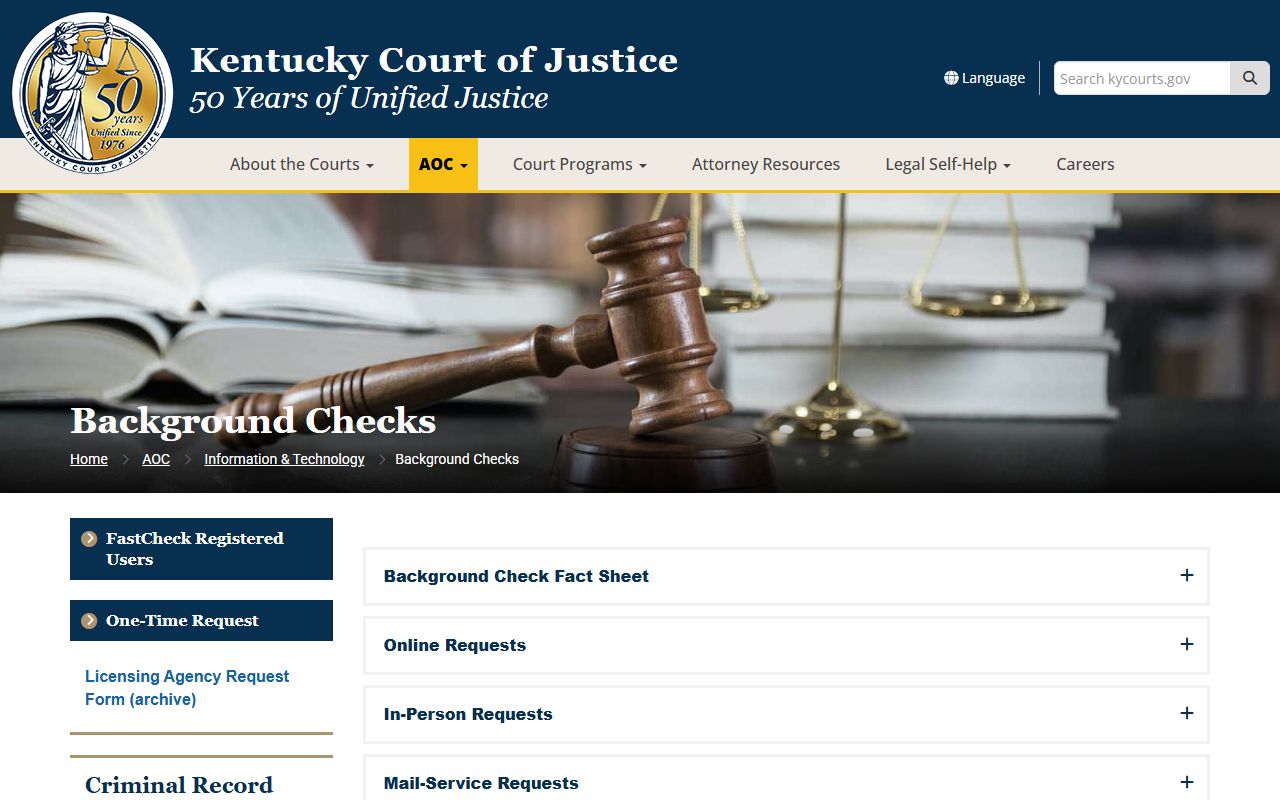
That distinction helps keep Monroe County criminal court records separate from formal criminal-history reports used for state background-check purposes.
The KCOJ expungement process page supports sealed and expunged record guidance.
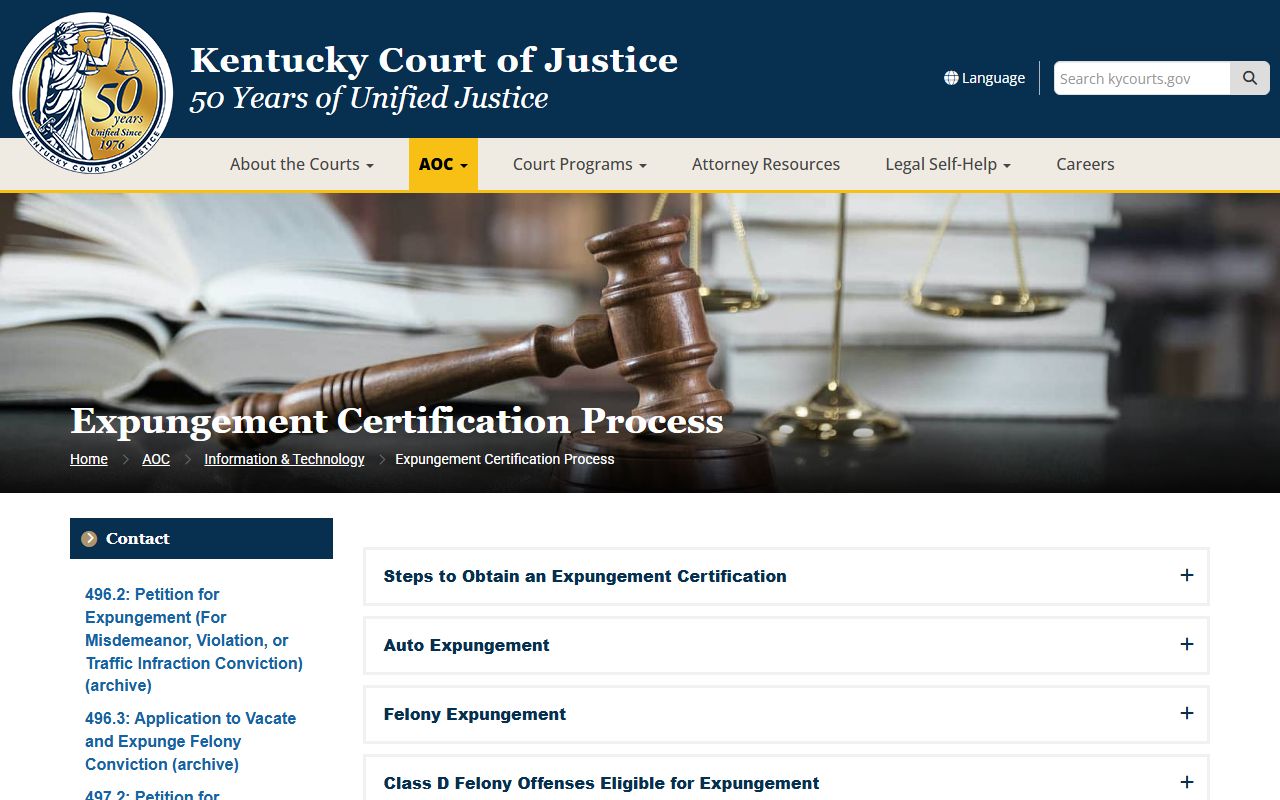
Expungement affects whether a Monroe County criminal case appears in official public systems after the court and agencies process an order.