
Monroe County Probate Jurisdiction
Kentucky District Court handles probate of wills. In Monroe County, the practical filing counter is the Circuit Court Clerk at the justice center because the circuit clerk supports both Circuit Court and District Court records locally. The Kentucky District Court page lists probate of wills as a District Court matter, while the Kentucky Circuit Court page identifies contested probate matters as Circuit Court matters.
The split matters. A routine estate opening, will admission, fiduciary appointment, or settlement may be a District Court probate matter. A dispute over a will, fiduciary conduct, real-property title, creditor claim, or estate administration may move into contested probate handled through Circuit Court jurisdiction. Both routes use the same Monroe County court location for local clerk contact.
The Kentucky legal forms library is the manifest source for the legal forms image below.
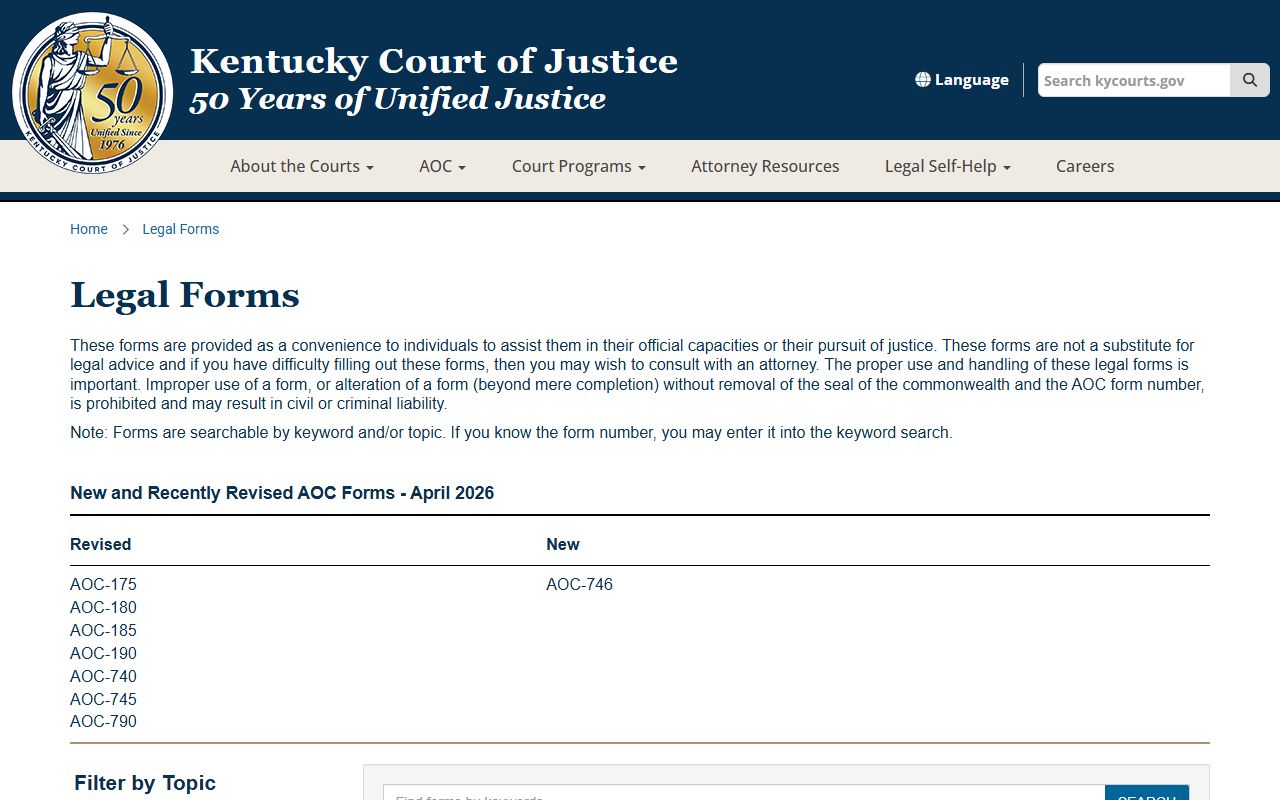
That statewide forms source is relevant because probate users often need current court forms before filing estate, guardianship, or related paperwork.
Monroe County Probate Terms
Probate records use terms that do not always appear in ordinary civil court records. These definitions help separate the person who died, the person managing the estate, and related protective proceedings.
- Testator
- A person who made a will before death.
- Executor
- A person named in a will to carry out the will and manage estate tasks after appointment.
- Administrator
- A person appointed to manage an estate when no executor is available or no valid will controls.
- Intestate
- Dying without a valid will, so distribution follows Kentucky intestacy law rather than a will.
- Guardianship
- A court proceeding involving care or decision-making for a minor or incapacitated person.
- Conservatorship
- A protective proceeding focused on managing property or financial affairs for someone who cannot do so alone.
Search Monroe County Probate Records
Public probate case information may appear through KYeCourts public records if the probate case is indexed and publicly available. Docket settings may be checked through the KCOJ docket portal by selecting Monroe County and the District division for probate settings when scheduled. Neither portal replaces the official court file held through the Circuit Court Clerk.
- Start with the decedent's full name, approximate date of death, and any known estate or case number.
- Search KYeCourts public records for public case information after completing the portal verification step.
- Use the docket portal only for calendar settings, not as proof of the official probate file.
- Contact the Circuit Court Clerk for certified copies, older estate files, or documents not available online.
- Search county-clerk records only for recorded estate documents, such as deeds, releases, liens, or affidavits of descent.
Probate access is a two-office process when an estate affects land. The court file may show appointment, inventory, orders, and settlements, while the county clerk record may show a deed, inheritance tax lien, release, power of attorney, or affidavit recorded after the court action.
Monroe County Probate Contacts
Routine probate and contested probate questions should begin with the court clerk. Estate-related recordings, such as affidavits of descent or deeds, belong with the county clerk. The two offices are close to each other in Tompkinsville but keep different records.
Monroe County Circuit Court Clerk
Clerk: Kim Hagan
300 N. Main St., Suite B
Tompkinsville, KY 42167
270-487-5480
Fax: 270-487-0068
Juror line: 270-487-6005
Monroe County Clerk
Clerk: Brandi Birge
200 N. Main St., Suite D
Tompkinsville, KY 42167
270-487-5471
Monday-Friday, 8:00 a.m.-4:00 p.m.
Monroe County Probate Fees
The research did not locate a complete official Monroe probate filing-fee table. Court filing and certified-copy costs should be confirmed with the Circuit Court Clerk, especially because eCourts notices say civil filing fees for Circuit and District Courts increase effective July 1, 2026 under Supreme Court Orders 2026-15 and 2026-18. Estate-related county-clerk recording fees are published on the clerk records page.
| Estate-Related Item | Office | Amount or Rule |
|---|---|---|
| Probate filing fee | Circuit Court Clerk | Confirm current District Court probate fee |
| Certified probate copy | Circuit Court Clerk | Confirm current copy and certification charge |
| Affidavit of descent | County Clerk | $50 |
| Inheritance tax lien | County Clerk | $5 |
| Inheritance tax lien release | County Clerk | $5 |
| Deed | County Clerk | $50 |
| Deed of correction | County Clerk | $46 |
| Release of mortgage | County Clerk | $46 |
| Judgment lien | County Clerk | $46 |
| Power of attorney | County Clerk | $50 |
Note: Probate filing fees are court fees, while deeds and liens are county-clerk recording fees.
Monroe County Probate File Contents
A Monroe County probate record may include the petition or application to probate a will or open an estate, the original will and codicils, proof of death, an order admitting the will, appointment of an executor or administrator, oath and bond, notices to heirs or creditors, inventories, claims, sale motions, real-estate orders, periodic settlements, and final settlements. Guardianship or conservatorship records may include petitions and orders for minors or incapacitated adults.
| Record Part | What It Shows |
|---|---|
| Petition or application | Who is asking to open probate and what relief is requested. |
| Will or codicil | The written estate plan submitted for probate. |
| Appointment order | The person authorized to act as executor or administrator. |
| Inventory | Estate assets reported to the court. |
| Creditor claim | A claimed debt against the estate. |
| Settlement | Accounting, distribution, and estate-closing information. |
The Monroe County Clerk home page is the manifest source for the local county-clerk screenshot below.
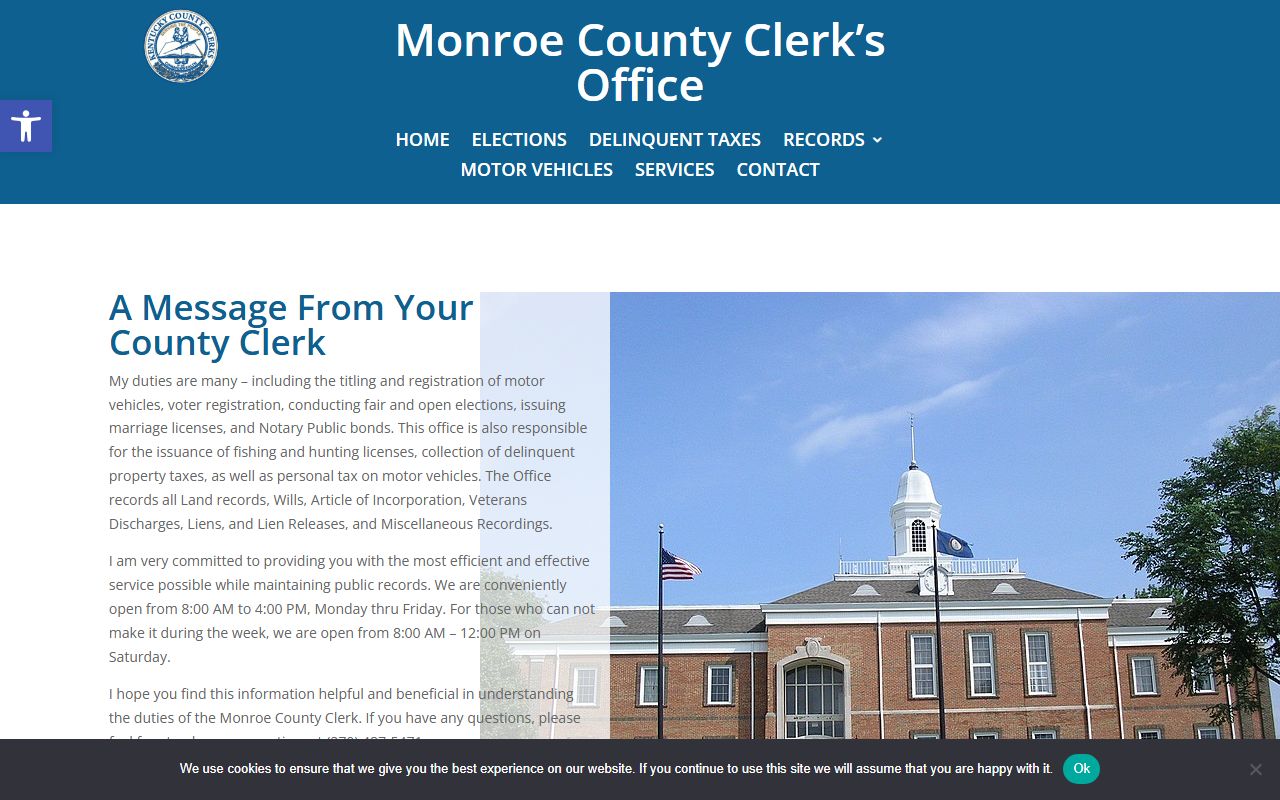
That local source matters because probate users may need county-clerk recordings after a court estate case affects real property.
Open Monroe County Estate Records
The probate workflow starts with determining whether a court estate is needed. If there is a will, the original will and death documentation are central. If there is no will, the estate may proceed through administration rather than appointment of the executor named in a will. The court appoints the fiduciary when the filing is accepted and the required oath, bond, and fee issues are addressed.
After appointment, the fiduciary gives notices, collects estate assets, pays lawful debts and claims, files inventories or settlements as required, and distributes property under the will or intestacy law. If a dispute arises over the will, title, fiduciary acts, or the way estate property is handled, contested probate falls under Circuit Court jurisdiction. Recorded estate documents may then need to be filed with the County Clerk, particularly when real estate changes hands.
County Clerk Estate Records
County-clerk estate records are not the same as probate case records. The Monroe County Clerk records page supports eCCLIX access, recording fees, DOC ALERT, and eRecording vendors. Estate researchers may use that office for recorded instruments tied to land or liens, while court users should use the Circuit Court Clerk for probate orders and certified court copies.
The same clerk records source is the manifest source for the county records image below.
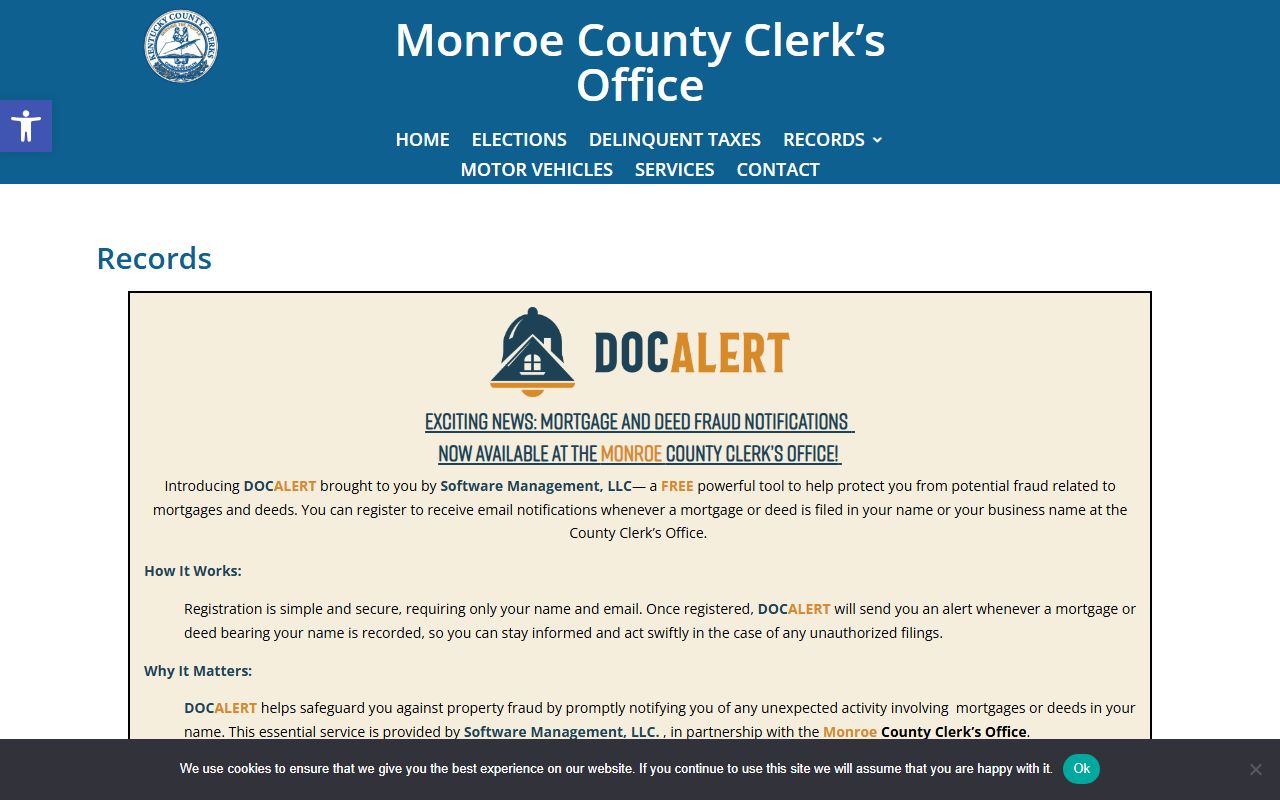
Recording-fee and eCCLIX information belongs in the probate access chain only when the estate record sought is a recorded county-clerk instrument.
Restricted Monroe County Probate Records
Probate files are often more public than juvenile, adoption, or mental-health records, but public access is not unlimited. Medical details, Social Security numbers, account numbers, protected addresses, minor information, and sealed disputes may be redacted or withheld. Guardianship and conservatorship matters involving incapacity can be sensitive because they may contain medical, financial, or personal-care information.
Kentucky open-records limits also matter when the requested item is held by the county clerk rather than the court. KRS 61.878 lists public-record exemptions, and the Monroe County Clerk requires an appropriate form or written request for clerk-held open-records requests. Court-file access questions should go to the Circuit Court Clerk because sealed or restricted court records may require a judge's order.